Data Centers
05.28.2026



Not all data center work looks the same. A contract fabricator in Wisconsin manufacturing server racks need to coat ten thousand enclosures a month has almost nothing in common with a liquid cooling OEM trying to qualify a finisher for a brand-new cold plate development. And neither of them is like a bus bar fabricator where a flawed plating job can take down an entire facility.
Pioneer segments these into three technology types. We call them: Hyperscale Industrial, New Technology Scaling, and Criticality-Driven.
Proven technology, exploding volume. Pioneer wins by scaling faster than competitors.
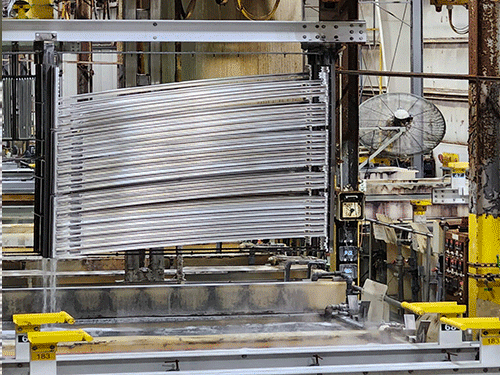
Hyperscale Industrial describes finishing work where the technology is well understood and the spec is stable but the volume is enormous and growing fast. These are the components that go into every data center, in massive quantities, and the pressure is on capacity, speed, and consistency.
Server racks are a clear example. Some of the largest sheet metal contract fabricators in North America produce racks for Google, Microsoft, Meta, and others at scale. They need a partner who can keep up with hyperscale production schedules, maintain finish consistency across enormous order volumes, and integrate into their supply chain without friction.
The same dynamic applies to raised floor pedestals, cable trays, aisle containment panels, HVAC enclosures, environmental sensor housings, generator housings, and cooling tower structures. In most of these applications, a market leader already knows exactly what finish they need. The question is whether their current finisher can actually deliver at the volume and pace the market now demands.
Pioneer’s value proposition in HI work is straightforward: capacity, throughput, and reliability. The pitch is not novelty — it’s execution.
Emerging technology moving from niche to mainstream. Pioneer wins on specification knowledge and the ability to ramp.
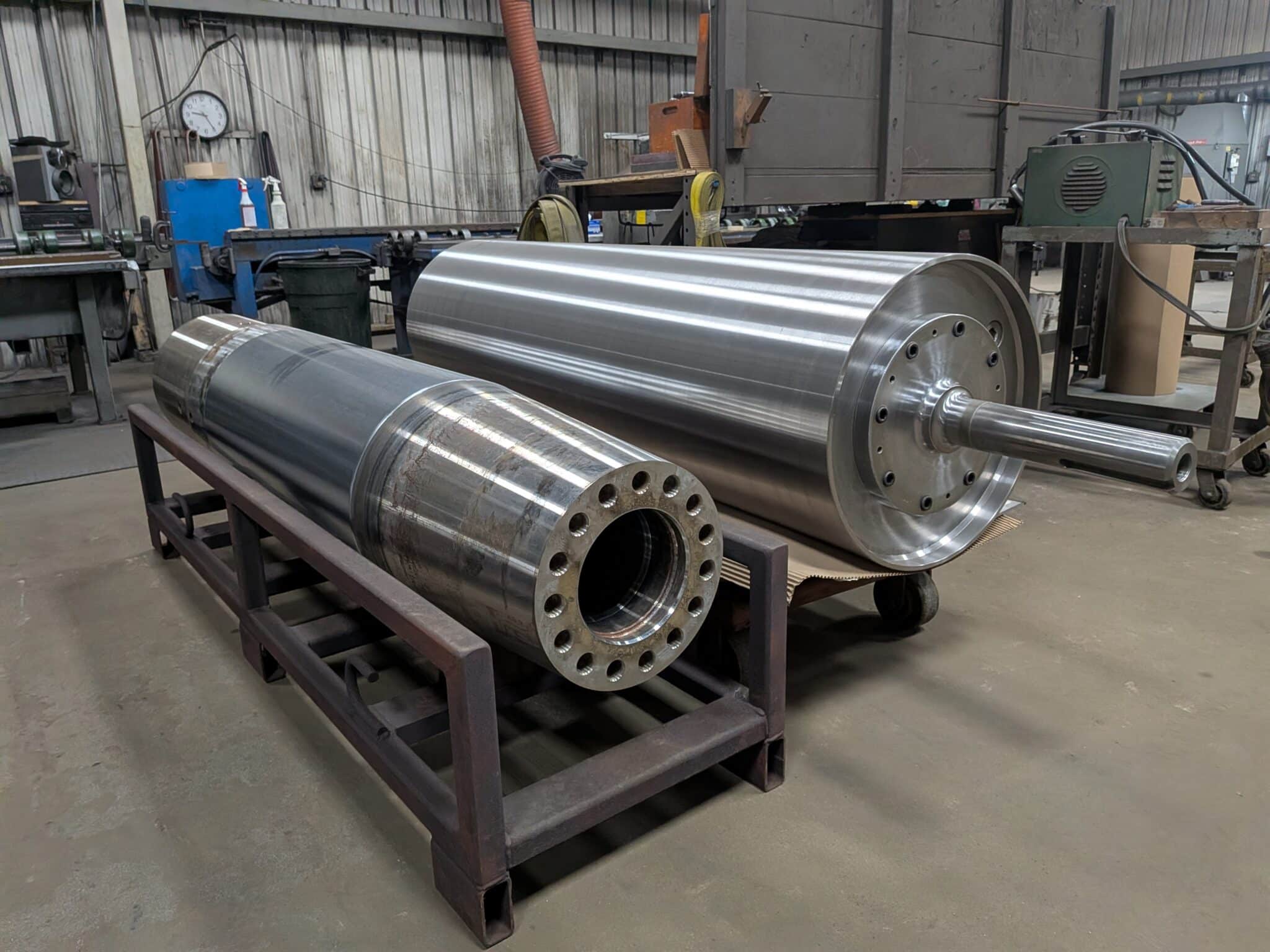
New Technology Scaling describes the finishing opportunity that opens when an emerging technology crosses the threshold from prototype or niche application into broad commercial deployment. The spec requirements are new and often demanding. The supply chain is still being built. And OEMs need a finishing partner who understands what they’re doing — not just one who can finish parts.
Liquid cooling is the defining NTS opportunity right now. Direct-to-chip cooling via cold plates and coolant distribution units is transitioning from a premium option for specialized deployments to a baseline requirement for AI infrastructure. The heat loads from next-generation GPUs are simply incompatible with air cooling at the rack densities hyperscalers are building toward.
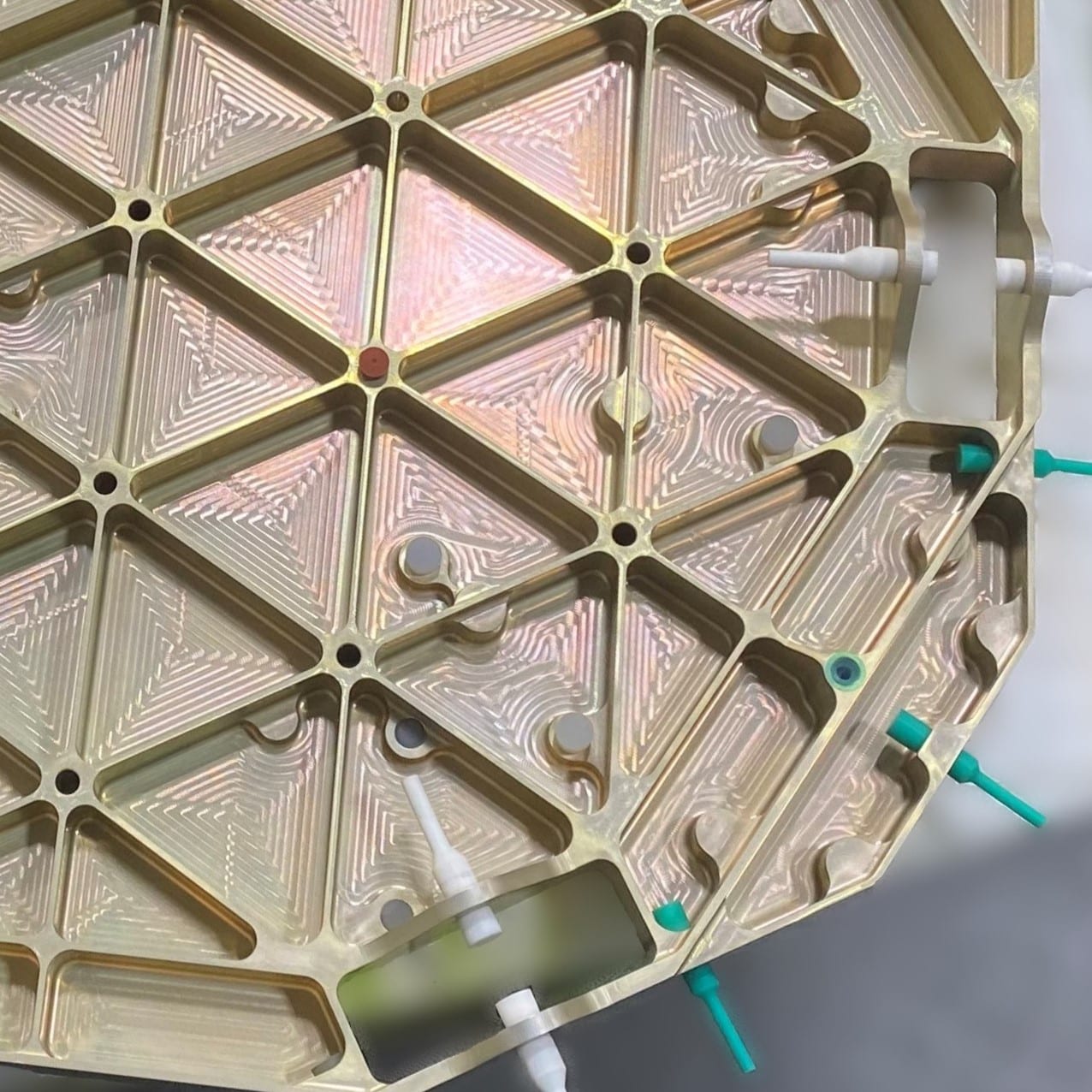
That transition creates an outsized finishing opportunity. Cold plates require tight-tolerance Type III hardcoat anodizing or electroless nickel on machined aluminum or copper. CDU enclosures and manifolds need precision anodizing and passivation. Stainless steel distribution tubing and orbital-welded connections require passivation to restore corrosion resistance after fabrication. These are technically demanding processes, and the OEMs building this equipment need finishers who understand the specs, not just the processes.
Battery Energy Storage Systems (BESS) represent a second NTS wave. Containerized outdoor BESS deployments are growing fast as data centers build independent power reserves. Suppliers like Tesla Energy, Fluence, EnerSys, and Hitachi Energy need finishing for large-format steel containers built to operate outdoors in all conditions — a straightforward application of proven corrosion protection, but at a scale and pace the market hasn’t needed before.
Pioneer already has active NTS engagements in liquid cooling, including stainless steel tubing passivation work supporting a tier 1 hyperscaler’s liquid cooling modules. That work is the model: understand the spec, qualify early, and grow with the volume.
Finish failure equals system failure. Five-nines uptime requirements make quality non-negotiable.
Criticality-Driven describes work where the surface treatment is not a finishing step — it’s a functional engineering requirement with direct consequences for system uptime. A resistive connection on a copper bus bar generates heat. A corroded contact on a transfer switch can cause a missed failover. A compromised coating on a high-voltage transformer tank leads to moisture ingress, insulation degradation, and eventual failure.
Data centers run on five-nines availability — less than six minutes of downtime per year. Every component in the power delivery chain is specified to that standard. That makes the electrical power distribution subsystem the clearest CD opportunity in the market.
Bus bars are the center of that opportunity. Copper bus bars run throughout LV distribution systems, UPS internals, and grounding infrastructure. They require electroless nickel or tin plating to prevent oxidation, maintain conductivity at connection points, and resist the thermal cycling that comes with load variation. Multiple North American copper bus bar fabricators fully outsource this plating work, and major OEMs including Eaton, ABB, and Legrand need the same processes at volume.
Beyond bus bars, CD work shows up wherever a finish failure could take something offline: grounding systems require tin or silver plating for conductivity reliability, high-voltage transformer tank coatings protect against the outdoor corrosion that leads to insulation failure, and switchgear enclosures need coatings that survive decades of outdoor exposure without degrading the EMI/RFI shielding that protects sensitive electronics inside.
The self-build substation wave adds another CD dimension. With utility interconnect backlogs running two to three years, major data center developers are now building their own substations. High-voltage transformer tanks, switchgear enclosures, and protective relay panel frames are all going through fabrication and finishing on an accelerated schedule — and the quality standard is unchanged from utility-grade infrastructure.
Complexity is introduced when an opportunity carries two designations at once. Liquid cooling is NTS+CD: new technology scaling fast, where a finishing defect in a cold plate can take a GPU offline. Bus bars in UPS and distribution systems are CD+HI: safety-critical finishing at hyperscale volumes. These are the conversations where Pioneer’s full range of capabilities, precision process knowledge and high-volume throughput, applies simultaneously.
There is no shortage of commentary about the data center boom. What’s less common is a metal finishing partner who has mapped the specific systems, subsystems, and components where surface treatment actually matters, and who understands the difference between a component where finish quality is a nice-to-have and one where it’s the difference between uptime and a cascading failure.
In the posts that follow in this series, we’ll apply this framework system by system, thermal management, electrical power distribution, power backup, interior structure, fire protection, controls and management, with case studies and specific finishing requirements grounded in real project experience.
Interested in a metal finishing partner with data center experience? Contact Pioneer Metal Finishing at www.pioneermetal.com/contact to discuss your project requirements.